Materials
6 min read
Lime, not paint: the case for breathable walls
Old Portuguese houses stayed healthy for centuries without a single tin of acrylic. Our restoration lead on why we went back to lime.

(Written by)

Henrique Dias
Restoration Specialist
Most damp problems we meet in old buildings were introduced in the last fifty years. Cement renders and plastic paints sealed walls that had been designed to breathe.
How lime works
Lime plaster is porous. It takes on moisture when the air is humid and gives it back when the air is dry. The wall becomes a slow regulator of the room’s climate.
It also cures by absorbing carbon dioxide from the air, slowly turning back into the limestone it was made from. A good lime wall gets harder every year.
A wall that breathes will outlive the people who built it.
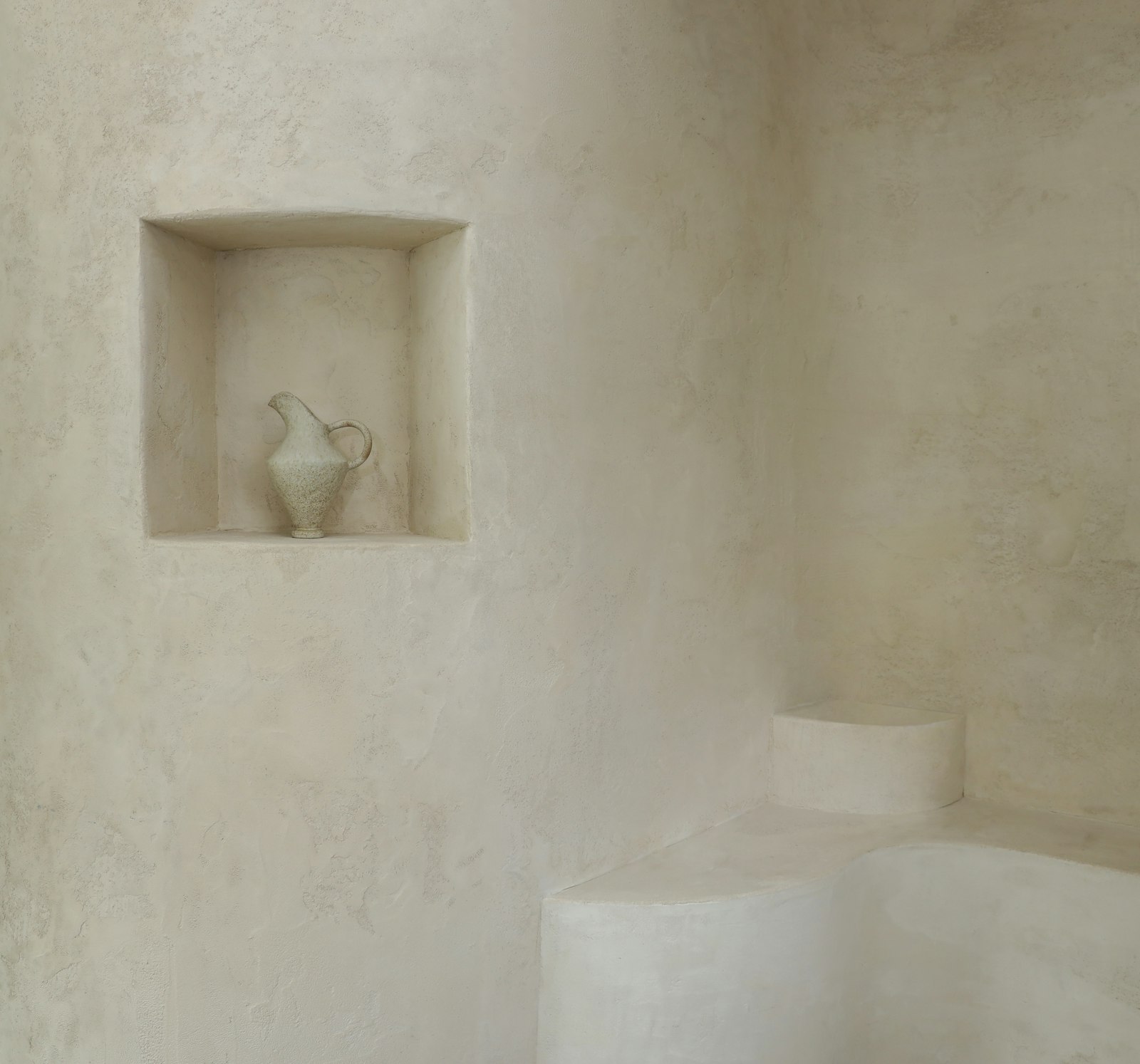
The finish
We apply three coats by hand and leave the surface slightly clouded. In raking light it looks like stone; in soft light it almost disappears.


